Typical machined parts
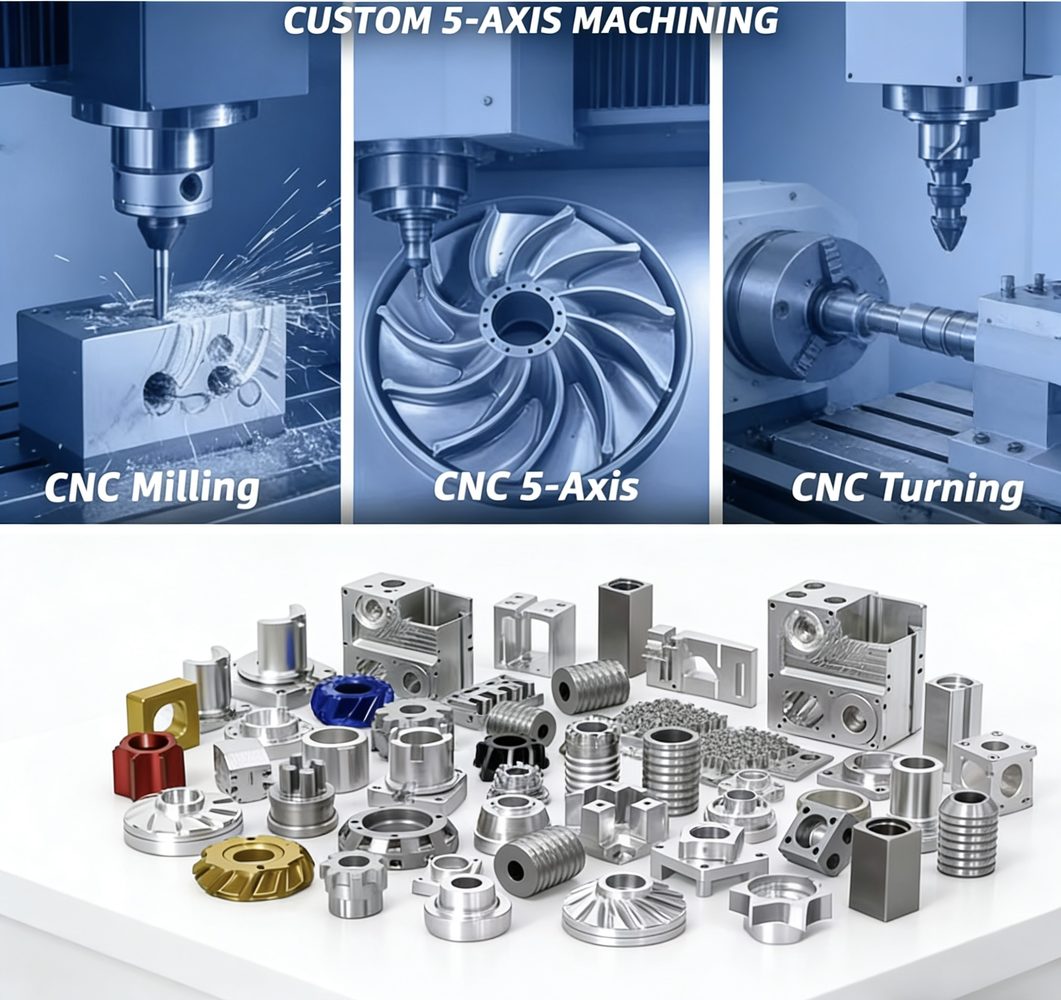
Gripper mounts, adapter plates, sensor brackets, lightweight arms, tooling blocks and locating components.
XHR machines custom end effector plates, mounts and tooling parts where low weight, stiffness, accurate locating holes and fast iteration are important.
Application engineering answer
Robot end-effector drawings should connect payload and center-of-mass requirements with the robot interface, tool-center-point references and gripper or vacuum-tool mounting features. Weight reduction must be balanced against stiffness, collision clearance, cable routing, repeat locating and the inspection features used to verify assembly.
| Review area | What buyers should define |
|---|---|
| Application fit | Gripper plates, robot adapters, vacuum tooling, sensor mounts, brackets and custom EOAT structures. |
| Drawing focus | Identify robot and tool interfaces, tool-center-point references, payload direction, locating features, clearances and cable routes. |
| Material and finish | Balance low mass, stiffness, wear and corrosion needs; define anodizing or protected contact surfaces where applicable. |
| Inspection and RFQ | Provide robot model or interface, payload notes, critical hole patterns, datum references, quantity and validation requirements. |
Technical review: XHR Precision Machining
CNC machining for robot end effector parts including gripper mounts, adapter plates, sensor brackets, lightweight arms and custom robot tooling.
Gripper mounts, adapter plates, sensor brackets, lightweight arms, tooling blocks and locating components.
Aluminum is often used for lightweight robot tooling, while steel or stainless steel may be used for wear or strength.
Locating holes, dowel fits, flatness, thread depth, edge break and assembly orientation should be marked clearly.
End effector parts often change after robot trials. Clear revision control helps prototypes move into stable repeat production.
Yes. Send drawings, 3D files, material, quantity, tolerances and finish requirements for review.
Yes. XHR supports prototype machining, small batch orders and repeat production after validation.
Critical dimensions, inspection method, surface finish, material grade, target quantity and delivery requirements help reduce assumptions.
Robot end effector parts often need light weight, precise mounting, repeat positioning and reliable connection to grippers, sensors, suction cups or tooling modules. XHR can machine gripper plates, adapter blocks, sensor mounts, vacuum tooling parts, brackets and custom robot EOAT components from drawings.
Include payload-related requirements, mounting hole patterns, datum references, critical dimensions, material preference and whether weight reduction is important.
XHR reviews assembly fit, thread quality, pocket depth, edge condition, surface finish and inspection points before quoting.
Prototype, small-batch and repeat robot tooling parts can be reviewed with drawing revision and inspection requirements.
Attach drawings, material, quantity, tolerances and surface finish requirements. XHR will review the machining route and reply with practical feedback.